Surgery Patient journey Dr. Z Results Patient stories Blog Contact Talk to the team

Your patient journey.

From your first call abroad to a year of follow-up, know what to expect from your care in Brazil.

Request a consultation
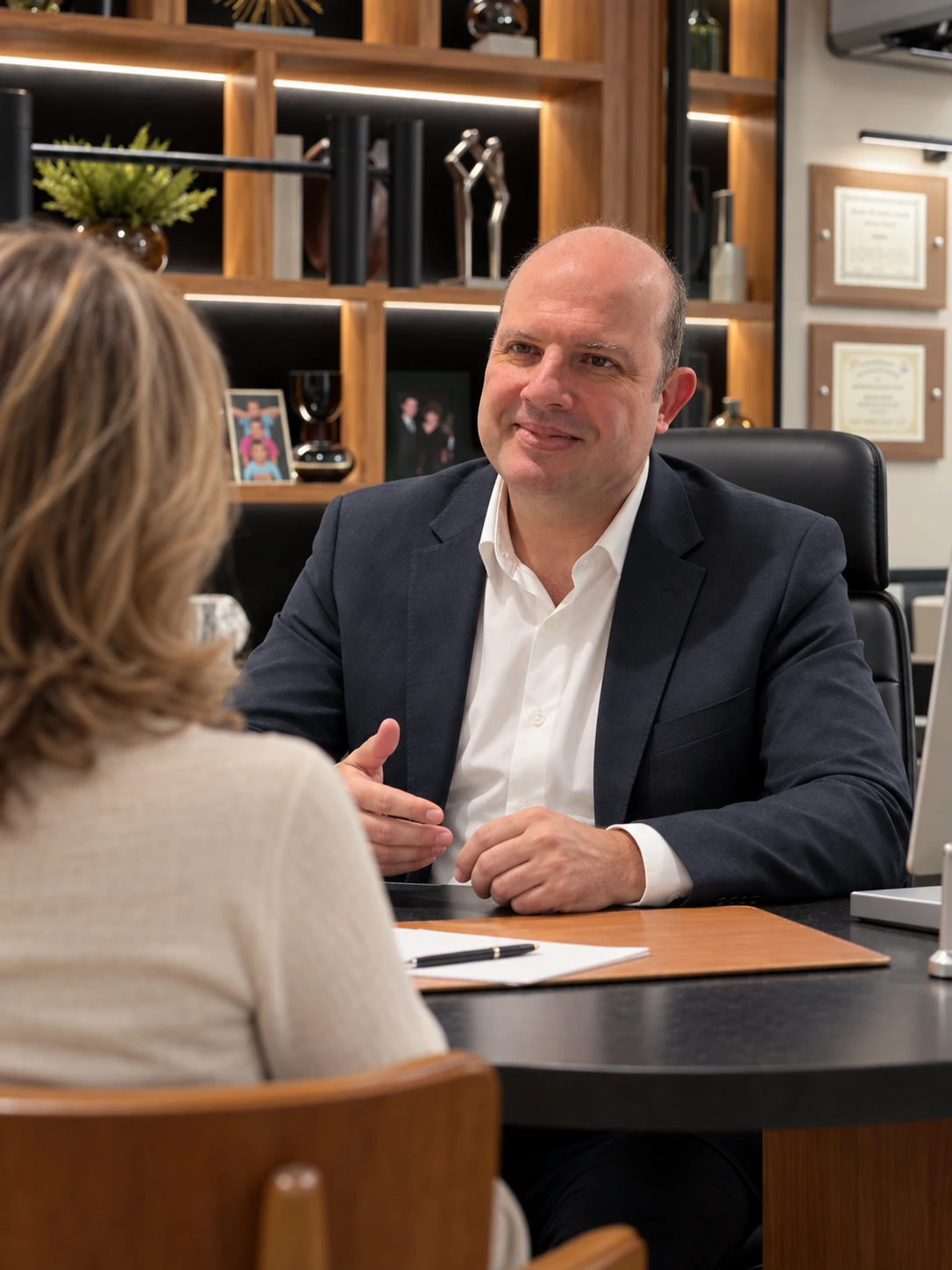
Patient journey — illustrative representation of Dr. Walter Zamarian Jr. speaking with a patient at his clinic
Explore

Know the people.
Understand the next step.

Traveling for surgery means planning more than an operation. I want you to know who will help you, what happens during your stay in Londrina, and how we stay in touch after you return home. This is the usual pathway for a facelift in my practice; your own instructions and appointments take priority.

Arrive two days before surgeryMeet me in person before the operationStay at least 12 days afterwardPreferably 14, depending on recoveryOne year of follow-upWith 24-hour postoperative WhatsApp support

Start the conversation from home.

01

Let Bruna help you get started.

Bruna is your first contact through this English-language site and helps you take the next step toward scheduling. Tell her where you live and your time zone so we can arrange the first conversation around the distance between your home and Londrina.

02

Meet me by video first.

We can begin with a preliminary video assessment while you are still abroad. I listen to your concerns and discuss possible approaches. This gives us a starting point; I confirm the plan after examining you in person before surgery.

03

Plan the practical steps before traveling.

After the preliminary consultation, João explains the individualized quote, the requested tests, and hospital admission arrangements. Coordinate these steps and the available surgery date with my team before booking flights. The plan remains subject to my in-person examination.

You can reserve with João or later with Isanna, with a deposit of 10% of the surgeon’s fee, rather than 10% of every expense involved in the trip and surgery. João explains the reservation and payment terms before you pay.

04

Prepare your tests and travel arrangements.

Complete the requested preoperative tests and arrange to send the results to my team through the agreed channel before your visit. João coordinates payment and provides your admission time, fasting instructions, what to bring, companion arrangements, and details such as nail polish. Ask about anything unclear before you travel.

How to organize your preoperative tests →

05

Amanda welcomes you in Londrina.

At your preoperative clinic visit the day before surgery, Amanda helps you settle in with a coffee or cappuccino. João collects the information for your patient record before you meet me. This is the in-person visit that follows our preliminary video consultation.

06

I examine you and confirm the plan.

During that same visit, I examine your face, review the test results, take photographs, and answer new questions. I explain the proposed procedures and discuss cases I have operated on, with context about what those examples can and cannot tell us about your own surgery. We confirm the plan after this assessment, rather than treating a video consultation as the final examination.
Build the trip around your appointments.

For a facelift, plan to arrive two days before surgery. The in-person consultation and photographs take place the day before the operation. Allow at least 12 days in Londrina afterward; 14 postoperative days are preferable if you can stay longer. These are planning intervals, not a guarantee that you will be ready to fly on a particular date. I confirm departure according to your recovery.

Discuss the dates with my team before booking flights. A different procedure may require a different stay; this facelift timetable should not be applied automatically to isolated eyelid surgery or another operation.

A place to stay

My team can suggest an apartment or Airbnb for your stay. Accommodation is arranged and paid for separately.

Getting to appointments

We can suggest a driver for trips between your accommodation, the clinic, and the hospital. Confirm availability and costs before traveling.

Someone to support you

Plan to have a responsible companion. If needed, we can suggest a caregiver for a separate arrangement. Agree on the services, schedule, and fees in advance.

Clear instructions for the morning ahead.

Check your transportation, admission time, and the individual fasting and medication instructions my team has given you.

Read the complete preparation guide →

Your prescription is personal.

Review medication instructions well before the trip, because some changes may need advance planning. The specific medicines, doses, and times belong in your individual prescription, not in this general guide. If the surgery time changes or an instruction is unclear, contact my team before making an adjustment.

Leave time to rest.

Pack what you need and confirm your transport so you can settle down for the night. If I have prescribed medication for the evening, follow those instructions. Do not add a sleep aid on your own.

From admission to my discharge assessment.

I operate at Hospital do Coração, Bela Suíça unit, in Londrina. The sequence below describes our usual routine. Your team confirms the schedule and adjusts it to your condition.

Read the full hospital guide →

  1. Two hours before surgery

    Arrive at the hospital.

    Allow time for admission by arriving two hours before the scheduled operation. Follow the admission and fasting instructions provided for you.

  2. In the operating room

    Flávia welcomes you.

    Flávia, my surgical instrument technician, receives you in the operating room. I mark the facial areas included in your plan and, when fat grafting is planned, the donor area. These markings translate our consultation into the details of the operation.

  3. After the operation

    Recovery with the hospital team

    You usually spend about two hours in the post-anesthesia recovery area before returning to your room. The team assesses when that transfer is appropriate.

  4. Usually 11 p.m.–2 a.m.

    I visit you in your room.

    I normally check on my surgical patients during these hours. The nursing team continues caring for you throughout the hospital stay.

  5. Around 5 a.m. · Day 1

    Help with washing

    When your condition allows and the team clears it, nursing staff help you shower and wash your hair before the discharge assessment.

  6. Around 7:30 a.m. · Day 1

    I assess you before discharge.

    I return the morning after surgery to examine you. Discharge is often planned around 7:30 a.m., but you leave only after my assessment confirms that it is appropriate.

Leaving the hospital is another step in your care.

We organize the early visits so you know whom you will see and why. Surgery day is day zero; the next day is day 1. Every interval below is counted from surgery, not from discharge, and depends on my assessment of healing.

Read the complete recovery guide →

Around postoperative day 2

Amanda removes the hemostatic net.

When a hemostatic net has been used, you return to the clinic for removal. Amanda, who is also a nurse, performs this care under my guidance.

From postoperative day 4

Two hair washes with Renan

After I clear you, Renan at Diogo Guerra salon helps with hair care. You receive two washes to gently help remove surgical soap and crusting and restore the appearance of your hair.

From postoperative day 5

Lymphatic drainage with Gisele

If I approve it, Gisele begins lymphatic drainage. She can visit your accommodation in Londrina, making it easier to organize these appointments during your stay.

From postoperative day 10

Additional care when appropriate

Endermology may be added after my assessment. The care with Gisele usually involves about ten sessions in total; the combination and frequency depend on my instructions, your recovery, and your stay. Arrange the schedule in advance.

Sutures are usually removed in stages on postoperative days 7, 10, and 14. When travel requires it and healing allows, I may bring the final removal forward to day 12. My team confirms which sutures are removed at each visit.

I follow your recovery through the first year.

Removing the sutures does not end our contact. Scheduled reviews allow me to assess your progress and discuss questions as recovery continues.

Your usual follow-up milestones

  • 7 days
  • 14 days
  • 30 days
  • 2 months
  • 6 months
  • 1 year

These are the usual minimum milestones for follow-up with me. They are separate from the discharge assessment, net removal with Amanda, and suture appointments, including day 10. We can add visits when needed. Postoperative photographs are planned at 2, 6, and 12 months.

Follow-up from your own country

When an in-person visit is not possible, an online review may be appropriate for that stage. We agree on how to provide photographs as well. A remote appointment cannot replace a physical examination when one is needed.

Questions between appointments

The clinic team is available during office hours, and you have 24-hour postoperative WhatsApp support from Isanna and me throughout follow-up. Contact us if you have a concern rather than waiting for the next scheduled review.

For shortness of breath, chest pain, or another emergency, seek urgent medical care where you are. Do not wait for a WhatsApp response.

One step at a time.

These are the usual intervals I use when planning facelift recovery. Your progress and the procedures performed determine each clearance; reaching a date alone does not mean an activity is safe for you.

The first ten days

Arrange transportation.

My usual instruction is not to drive for ten days. After that, driving requires my clearance and safe conditions, including consideration of any medication you are taking.

Around two weeks

Social plans can begin to feel comfortable.

In my practice, many patients feel ready for social activities around two weeks, and most by the third week. Swelling may still be present. Discuss important commitments with me rather than treating this as a deadline for your appearance.

During the first month

Protect your rest.

I generally ask patients to sleep on their back and avoid exercise for a month. That does not mean remaining immobile: follow the instructions my team gives you about everyday movement.

After one month

Return gradually.

With my clearance, side sleeping and light activities can resume, such as walking, cycling, or gym exercise at about half your usual load.

After two months

We assess fuller activity.

If recovery is progressing appropriately, I may clear running, spinning, and your usual gym load. We make that decision through follow-up, taking the full surgical plan into account.

What should we agree on before you travel?

Can the planning begin by video?

Yes. We can start with a video consultation while you are abroad. I then examine you in person before surgery to confirm the plan. Bruna is your first contact to begin arranging the consultation.

Is the reservation deposit 10% of the entire surgery cost?

The deposit is 10% of the surgeon’s fee. João explains the individual quote, what the payments cover, and the reservation terms before you pay.

How much time should I allow in Londrina?

For a facelift, arrive two days before surgery and plan at least 12 days afterward, preferably 14. The final suture removal may be brought forward to day 12 if healing allows. My assessment determines when you can leave; later follow-up can be online when appropriate.

Can I use this page as my medical instructions?

No. This page explains how care is usually organized. Your prescription, fasting instructions, appointment schedule, and activity clearances are individual. Ask my team about any difference or uncertainty before acting.

Does follow-up stop when I leave Brazil?

No. I follow your recovery for a year. Returning to your country does not end the scheduled reviews or postoperative WhatsApp support from Isanna and me.

Knowing the practical steps can make it easier to focus on the questions that matter to you.

Request a consultation

By Dr. Walter Zamarian Jr. · CRM/PR 17.388 · RQE 15.688