Surgery Patient journey Dr. Z Results Patient stories Blog Contact Talk to the team

Chin Augmentation

A balanced profile starts with understanding what your chin contributes.

Schedule my consultation
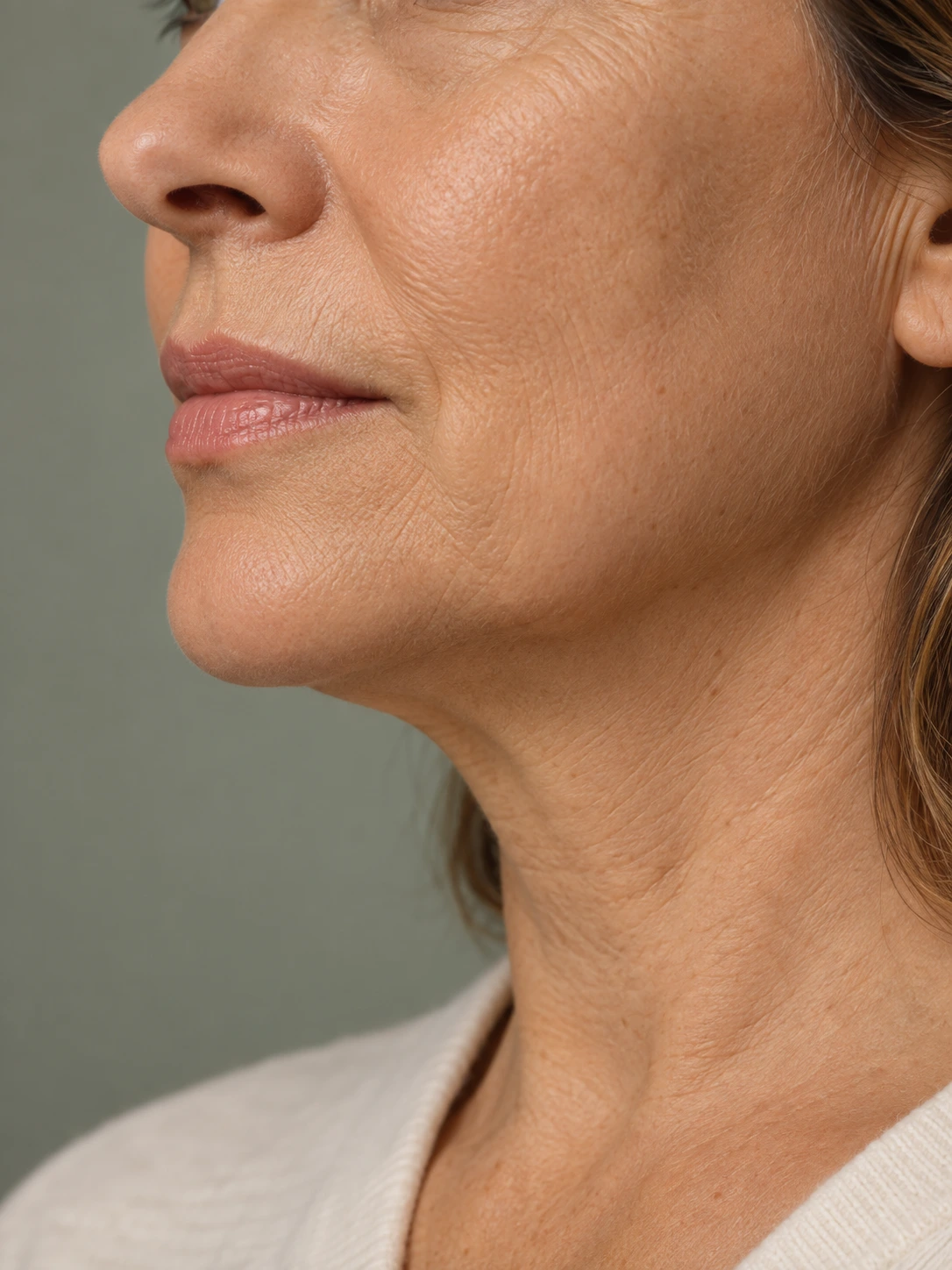
Chin augmentation — illustrative close-up of a mature woman’s chin and jawline

Illustrative image; not a patient or surgical result.

Explore

What is chin augmentation?

Chin augmentation increases the projection of an underdeveloped chin. In my practice, I use a solid silicone implant placed through an incision inside the lower lip. It changes the local contour; it does not move the whole jaw, correct a bite problem, or replace a facelift. I choose the approach after examining your face from several angles, your chin and jaw relationship, and your dental history.

  • My implant technique uses solid silicone, not an injectable gel.
  • I do not perform bone-cutting genioplasty or chin reduction.
  • A small amount of fat may refine selected contours, but I do not expect it to provide the same structural projection as an implant.
  • Infection, displacement, sensory changes, and possible revision belong in the conversation before surgery.

Start with the concern, not an implant size

You may notice your chin most in a side photograph. Perhaps the lower face seems to disappear into the neck, or the nose looks more prominent than you would like. Those observations are useful, but they do not tell us which operation is appropriate. The underlying issue may be chin projection, loose tissue, the relationship between the jaws, or a combination.

When we meet, I want to hear what draws your attention and what you would like to preserve. A stronger chin is not automatically a better chin. An attractive change should make sense from the front, in three-quarter view, and when you smile or speak—not just in one carefully positioned profile photograph.

I also consider how a proposed chin change fits your facelift plan. The purpose of this assessment is to give each part of the plan a clear job. If the chin already has adequate projection, an implant may add something you do not need. If projection is genuinely lacking, tightening surrounding tissue alone may leave that concern unresolved.

Three different problems can look similar in a photograph

Limited chin projection

The front of the chin may sit farther back than expected in relation to the rest of the face. An implant can be considered when the concern is local projection and the examination supports that choice. Its dimensions must suit the existing anatomy rather than a standard template.

A jaw or bite problem

The position of the teeth and the relationship between the jaws deserve their own assessment. A chin implant does not correct the bite. When the examination raises a structural concern, I recommend appropriate dental, orthodontic, or maxillofacial evaluation before deciding whether an aesthetic implant makes sense.

Loose tissue beneath the jaw

Skin laxity and changes in the neck can obscure the lower-face contour even when chin projection is reasonable. A facelift and, when indicated, a deep neck procedure address different structures. Adding a chin implant does not remove excess skin or treat every source of fullness under the jaw.

You do not need to diagnose yourself before contacting us. Bring the photographs that prompted your question, describe the change you hope to see, and tell me about any previous facial or dental treatment. Separating these possibilities is part of the consultation.

How I plan a silicone chin implant

I use a solid silicone implant. Through an incision inside the lower lip, I prepare a pocket over the bony chin and select a shape that fits the planned contour. In the technique I use, I do not fix the implant with screws; pocket preparation and healing contribute to its stability. That describes my approach, rather than a claim that all other fixation methods are inferior.

The choice is more detailed than deciding between a “small” and “large” implant. I look at forward projection, width, symmetry, and the transition toward the jaw. Your preferences matter as much as avoiding a shape that looks disconnected from the rest of your face. I do not choose an implant solely by gender.

An intraoral incision avoids a planned external incision under the chin, but there is still an internal wound and a scar. It needs careful follow-up. Having the incision inside the mouth does not make infection, wound separation, or displacement impossible. We discuss the relevant tradeoffs before you decide.

If you already have an implant, please send or bring the operative information you have. Knowing its material, position, and any previous difficulty helps me assess the situation. A revision requires its own plan; increasing the size without understanding the cause of dissatisfaction may not solve the problem.

Let us assess your profile together

We can discuss how chin projection, the jaw, and the neck contribute to your concerns.

How chin augmentation fits a facelift

A deep plane facelift repositions facial tissue. A chin implant adds local projection. When both are indicated, they can contribute different elements to the same plan. I explain those contributions separately so you understand why an additional procedure is being proposed.

The deep neck assessment is separate again. The neck contains several structures that may influence its contour. An implant is not a substitute for evaluating them, and a neck procedure is not a substitute for assessing the skeletal profile. In my practice, deep neck surgery is performed with a facelift, rather than as an isolated operation.

I sometimes add a small amount of fat to the chin during facial surgery. In my experience, this can provide a modest contour adjustment. I do not present it as interchangeable with the structural projection of a silicone implant. The choice depends on what needs to change, not on trying to use one technique for every concern.

Implant and bone surgery are different choices

Bone-cutting genioplasty moves a segment of the chin bone. Implant augmentation adds material over the existing structure. I do not perform bone-cutting genioplasty or chin reduction. If the assessment points toward one of those approaches, I explain that limitation and recommend the appropriate specialist evaluation.

A 2025 systematic review compared implant augmentation with osseous genioplasty in seven single-center studies involving 1,126 patients. Follow-up ranged from six months to six years. Both groups reported favorable satisfaction, with a trend toward higher satisfaction after osseous genioplasty. The included studies reported more infections and wound separation with implants, while bone surgery was associated with changes in sensation that sometimes persisted. Bone surgery also showed greater soft-tissue predictability. These findings do not support calling an implant the best option for every patient.2

The comparison is useful because it makes the alternatives more concrete. It does not tell us your personal likelihood of a complication, and it does not turn a procedure I do not offer into an appropriate choice within my practice. Your anatomy and the purpose of treatment come first.

What the implant research can—and cannot—tell us

A 2023 systematic review examined 39 publications covering more than 3,104 patients who had chin implants. Thirty-one publications were retrospective case series. The investigators compared materials and surgical approaches, but the underlying studies were not a uniform, randomized comparison.1

Silicone had a lower reported rate of altered sensation than the other two most frequently studied materials. However, the review did not find statistically significant differences between material groups for several other complications, including infection, displacement, extrusion, revision, removal, and asymmetry. It also reported a higher implant-removal rate but less asymmetry with intraoral than extraoral incisions.1

That is why I explain my preferences without promising that a particular material or incision eliminates risk. Published comparisons help inform the discussion. They cannot account for every difference between patients, surgeons, implant designs, and follow-up periods, or guarantee an individual result.

Recovery includes looking after the internal incision

The outside can look settled before the wound inside the mouth has fully recovered. In my usual routine, I initially recommend a liquid diet for about five days and then adapt progression to healing. An external dressing commonly stays in place for five to seven days. Your written instructions take precedence over these general planning intervals.

Swelling can temporarily exaggerate projection or make the two sides appear different. Sensation in the chin or lower lip may also change. Do not press on the implant to check whether it is in the right place. At follow-up, I assess the contour and the incision rather than relying only on how the profile looks in a photograph.

After a chin implant, my usual guidance includes sleeping on your back and avoiding exercise during the first month, with progression discussed at your reviews. When chin augmentation is combined with a facelift, the overall recovery plan governs activity, sleeping position, and appointments. A date on the calendar does not replace an assessment of healing.

Please tell us about dental treatment you are planning, current oral symptoms, and medications or supplements you use. Do not stop or start treatment based on a website. We will give you individualized preparation and aftercare instructions.

Risks deserve a clear discussion

Implant-related concerns include infection, displacement, asymmetry, exposure, changes in sensation, and the possibility of removal or another operation.1 In my consultation, I also discuss possible bone resorption beneath an implant. I do not set one compulsory replacement date for every patient; instead, I emphasize long-term follow-up and assessment of any new symptoms or change in contour.

Other surgical risks include bleeding or hematoma, fluid collection, persistent pain, poor wound healing, unfavorable scarring, and an unsatisfactory aesthetic result. Scar tissue around an implant can become problematic. Anesthesia and serious systemic complications, including blood clots and cardiopulmonary events, must also be considered in the overall surgical assessment.3

Contact the team promptly if you develop increasing swelling, fever, discharge from the mouth, worsening pain, exposed material, or a new change in contour. Breathing difficulty or chest pain requires urgent emergency assessment rather than waiting for a WhatsApp response. Your discharge instructions will explain how to reach us and what to do if a problem develops.
Planning from outside Brazil

Your first conversation is with Bruna. She can explain how to arrange an assessment and help coordinate the next steps. An online consultation can begin the discussion, but the plan must be confirmed in person before surgery. Photographs alone cannot fully assess the bite, the tissues, or an existing implant.

For a combined facelift journey, plan to arrive two days before surgery. The in-person consultation and photographs are usually completed the day before. After the operation, allow at least twelve days in Londrina, preferably fourteen, for the planned early follow-up. These are arrangements for the combined facelift pathway, not automatic permission to fly or a recovery guarantee for every chin procedure.

The patient journey explains how appointments, local support, and ongoing reviews fit together. Before buying flights, confirm the schedule with the team and allow flexibility if recovery requires it. Follow-up after you return home matters as well; we explain what can be reviewed remotely and when an in-person examination may be necessary.

Your questions deserve thoughtful answers.

Will a chin implant fix my bite?

No. It changes the local chin contour rather than repositioning the whole jaw or correcting dental occlusion. A suspected bite or jaw problem needs the appropriate assessment before an aesthetic plan is chosen.

Will there be a scar under my chin?

My implant access is inside the lower lip, so there is no planned external incision for that access. There is an internal scar and a healing period. If other procedures are proposed, their incisions must be discussed separately.

Can fat replace a chin implant?

In my practice, fat can sometimes make a small contour adjustment. I do not expect it to provide the same structural projection as an implant. I also do not offer injectable filler treatment as an alternative service.

Can I judge the result immediately?

The projection changes during surgery, but the dressing and swelling affect the early appearance. Follow-up and photographs help assess how the tissues settle. An early photograph is not the final result.

Do you reduce the chin or operate on the bone?

No. My chin-augmentation approach uses an implant. I do not perform chin reduction or bone-cutting genioplasty and will recommend another evaluation when that is the appropriate direction.

How is the cost determined?

The team prepares an individualized estimate after assessment, including the agreed procedures and relevant hospital, anesthesia, and implant costs. Ask which follow-up arrangements are included and plan travel and accommodation separately. This page does not quote a surgery price.

You can start by showing me what you notice and explaining what you hope to change. I will help distinguish the role of the chin from the role of the jaw, neck, and facial tissues, then explain what a proposed treatment can reasonably contribute. Bruna can help you arrange that conversation from abroad.

← Explore procedures